

News and Announcements
STEM and Food Sustainability: The Science Behind Freshness, Safety, and Shelf Life
Published Date
- November 25, 2025
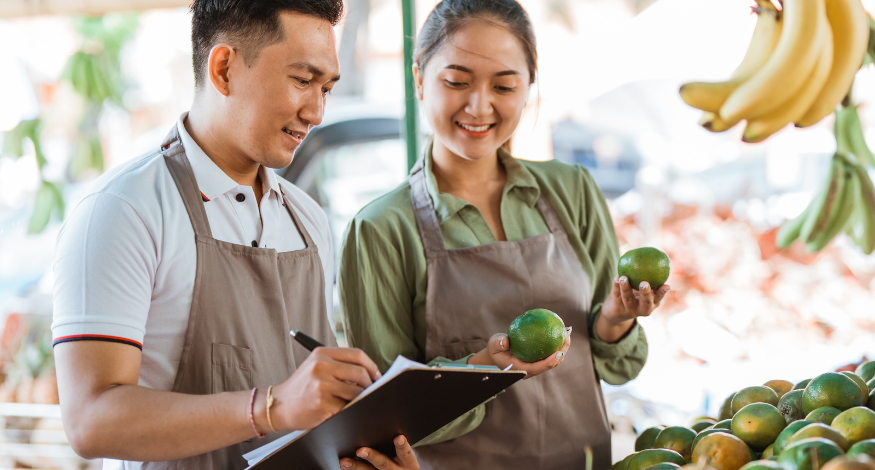
Each year, National STEM Day on November 8th shines a light on the creativity, ingenuity, and impact of science, technology, engineering, and math. With up to 40% of US food wasted, STEM thinkers are tackling a major sustainability challenge: extending the shelf life of food.
Innovators are asking: What if fruit could protect itself from spoilage? What if packaging could “talk” to us about freshness? What if AI could predict food waste before it happens?
Today’s STEM-driven breakthroughs are doing just that.
Edible Coatings: Nature-Inspired Protection
Imagine apples, strawberries, and avocados wearing invisible, edible armor that extends freshness without synthetic preservatives or plastic. That’s the promise of edible coatings, a fast-growing field in food science.
Companies such as Apeel Sciences use plant-derived lipids to create tasteless, breathable coatings that slow water loss and oxidation. According to Xtalks, these coatings have already helped reduce spoilage in avocados by 50% or more.
By mimicking produce’s natural defenses, these coatings buy time, increase flexibility, and dramatically reduce waste across the supply chain.
Smart Packaging: A New Language of Freshness
Packaging is no longer just about branding and containment; it’s becoming a communication tool. Smart packaging now monitors freshness, temperature, and microbial growth in real-time, helping consumers and businesses improve safety and reduce waste.
For example, time-temperature indicators (TTIs) and color-changing sensors show when food meets unsafe conditions. Some packaging includes antimicrobial agents that actively inhibit spoilage-causing bacteria.
This technology not only extends shelf life, but also empowers consumers to make better decisions, shifting the focus from arbitrary “best-by” dates to actual food safety and quality.
AI and Data: Predicting Spoilage Before It Happens
Machine learning algorithms and sensor data analyze humidity, temperature, and microbial activity to predict spoilage patterns with striking accuracy. This opens a new frontier in preservation.
Grocery chains and food suppliers already use these predictive models to optimize logistics, reduce overstocking, and fine-tune storage conditions. The result? Less food waste, lower emissions, and smarter systems all driven by data.
Startups like Wasteless and FreshKey build tools that dynamically price perishables or alert users when freshness thresholds are reached. The fusion of food science and data science is quickly becoming a game-changer.
From Classrooms to Global Impact
What makes these innovations especially exciting is that they often begin in classrooms, science fairs, and university labs. Hands-on experimentation and interdisciplinary thinking empower young scientists to tackle real-world problems.From seaweed wraps to AI spoilage models, students show that STEM education fuels scalable, meaningful change.
National STEM Day is not just a celebration of technical skill; it’s a tribute to curiosity, problem-solving, and the drive to build a more sustainable future. In the quest to keep food fresher for longer, today’s STEM thinkers are proving that even the most ordinary banana or tomato can inspire extraordinary breakthroughs.
As we celebrate the power of discovery, let’s continue to invest in the tools, mentorship, and opportunities that help young inventors turn science into solutions and curiosity into impact.
About Michelson IP
The Michelson Institute for Intellectual Property, an initiative of the Michelson 20MM Foundation, provides access to empowering IP education for budding inventors and entrepreneurs. Michelson 20MM was founded thanks to the generous support of renowned spinal surgeon Dr. Gary K. Michelson and Alya Michelson. To learn more, visit 20mm.org.